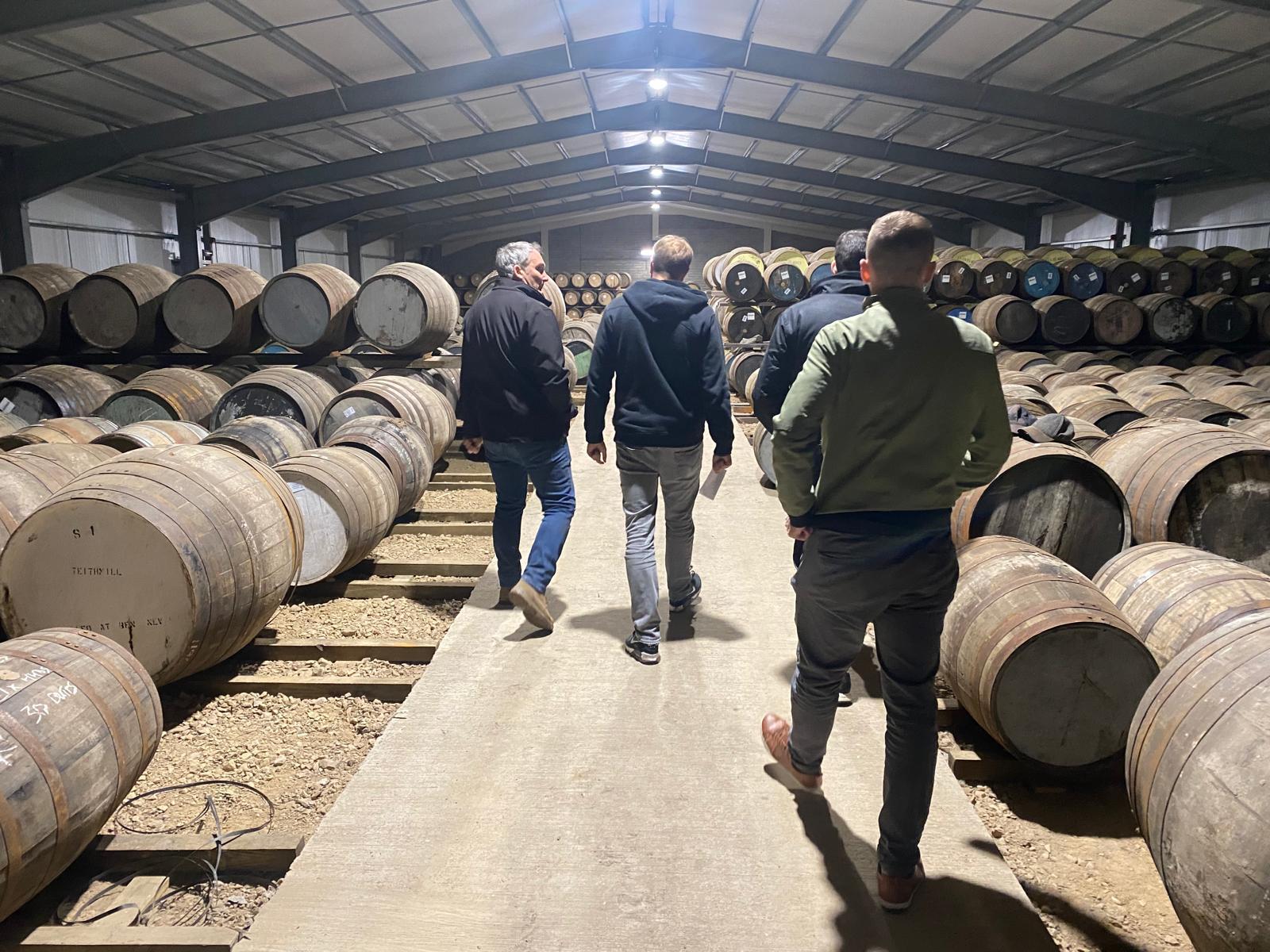
A whisky inheritance sale example is most useful when it shows more than a headline valuation. For an executor or beneficiary, the real task is establishing what is owned, who may sell it, where it is stored and what amount will actually be received after the transaction is complete. A mature Scotch whisky cask can be a valuable estate asset, but it is not a conventional bank balance. Documentation, warehouse records and transfer mechanics all affect the sale.
The following worked example is illustrative rather than tax or legal advice. It reflects the practical decisions that commonly arise when a UK estate includes a privately owned cask held in a bonded warehouse.
Whisky inheritance sale example: from estate to completion
James dies leaving one cask of Scotch whisky to his daughter, Eleanor, under his will. The cask was purchased several years earlier and remains in a Scottish bonded warehouse. It has not been bottled, and duty and VAT have not been paid because the spirit is stored under bond.
Eleanor is also the executor. Her first instinct is to sell immediately, but the original purchase certificate shows only James's name and an old correspondence address. Before a buyer can be introduced, she needs to demonstrate authority to deal with the asset and confirm that the warehouse recognises the cask as part of the estate.
The estate's solicitor obtains the grant of probate. Eleanor then provides the grant, the death certificate, her identification and the cask's purchase records to the relevant parties. The warehouse record is checked against the cask number, distillery, fill date, cask type, current bulk litres and alcohol strength. This verification stage is not administrative theatre. A precise cask reference prevents a sale being agreed on incomplete or mismatched information.
Once the evidence is accepted, the cask can be valued and prepared for market. The estate does not need to remove the cask from bond or bottle it merely to sell it. In most cases, the cleaner route is a transfer of beneficial ownership while the cask remains in bonded storage.
Establish the asset before discussing a price
A single figure on an old certificate is rarely enough to establish current resale value. Whisky values can move materially over time, and two casks from the same distillery may command different prices because of age, spirit character, cask quality, remaining volume and saleability.
For this example, the verified warehouse data confirms the following: a 2008 vintage single malt, filled into a first-fill sherry butt, with 312 litres of bulk liquid remaining at 56.8% ABV. The cask has remained under bond and no private bottling agreement has been entered into.
An appraisal considers comparable recent transactions where available, demand for the distillery and age bracket, the cask's specification and its likely maturation trajectory. It should also account for what cannot be known without further sampling or a warehouse assessment. A romantic description of a cask is not a substitute for credible data.
After reviewing the file, the indicative market range is set at £88,000 to £102,000. The range is intentionally not presented as a guaranteed result. A narrow price expectation may be possible for a particularly liquid profile, while an unusual cask or less-traded distillery may require more patience and a wider range.
Eleanor and the other beneficiaries decide that a sale at £95,000 or above is acceptable. That figure is not simply a valuation. It is an agreed decision point for the estate, taking account of the need to distribute assets without delaying probate unnecessarily.
Price, speed and certainty are different choices
A private sale can sometimes produce a stronger price if the right collector is found. It may also take longer, require more negotiation and expose the estate to greater uncertainty around payment and transfer.
A quicker exit may involve accepting an offer nearer the lower end of the range. For executors, this can be sensible where beneficiaries need funds, the estate has liabilities, or the administration period is already extended. The right route depends on the estate's priorities rather than on an assumed need to achieve the highest possible headline price.
How the sale is structured
A specialist marketplace or broker presents the verified cask information to suitable buyers without making unsupported claims about future returns. Interested parties are screened, and an offer of £97,500 is received from a buyer seeking stock for long-term maturation.
Before the offer is accepted, Eleanor receives a clear schedule of the commercial terms. In this example, the agreed sale commission is 5% plus VAT on the commission. The buyer is responsible for any buyer-side charges and ongoing warehouse storage after the ownership transfer date. The estate remains responsible for storage and insurance charges accrued up to that point.
The calculation is straightforward:
- Agreed sale price: £97,500
- Commission at 5%: £4,875
- VAT at 20% on commission: £975
- Total selling cost: £5,850
- Net proceeds to the estate before any estate-specific costs or tax: £91,650
The distinction between gross price and net proceeds should be explicit from the outset. A sale advertised at £97,500 is not the same as £97,500 available for distribution. If a provider charges listing fees, sampling costs, warehouse administration fees or a minimum commission, these should be stated before the cask is listed.
Payment and bonded warehouse transfer
The buyer pays cleared funds through the agreed secure payment process. Funds are not released to the estate merely because an offer has been accepted. The transfer documentation and warehouse instruction must be ready to complete, so that money, title and custody move in an orderly sequence.
The warehouse receives a formal instruction confirming the outgoing estate and the incoming owner. Its administration team updates its ownership register, applies the buyer's account or delivery order arrangements, and confirms that the cask remains in bond. The cask itself ordinarily stays in place; there is no need for it to travel simply because ownership has changed.
Once the transfer is confirmed and the agreed conditions have been met, the estate receives the £91,650 net proceeds. Eleanor retains the sale agreement, payment statement, commission invoice, warehouse confirmation and valuation evidence within the estate file. Those records support transparent reporting to beneficiaries and may be needed by accountants or legal advisers.
A professionally managed transfer matters because an informal agreement, even between well-intentioned parties, does not by itself update the warehouse's register. The buyer needs recognised ownership. The executor needs evidence that the estate has properly disposed of the asset.
Tax and probate points that should not be guessed
The cask's probate value and its eventual sale price can differ. Inheritance Tax reporting, potential capital gains considerations and the administration of estate income are matters for the estate's solicitor or tax adviser. The treatment will depend on the deceased's residence and domicile, the estate's wider position, the date-of-death valuation and other facts.
Keeping the appraisal and sale records is therefore prudent. If the cask sells above its probate value, the estate's advisers can assess the relevant position using evidence rather than estimates. If it sells below, the executors can show that they followed a documented, market-based process rather than disposing of the asset carelessly.
Excise duty is a separate practical issue. A cask that remains in a bonded warehouse is not automatically subject to duty and VAT merely because it changes owner. Charges generally arise when whisky is released from bond for consumption, subject to the destination and applicable rules. Executors should not arrange delivery to a private address without understanding the duty, VAT, transport and licensing implications.
Common mistakes in inherited cask sales
The most expensive mistake is often listing before the owner and warehouse details are verified. That can lead to a withdrawn listing, a delayed completion or reduced buyer confidence. It is also unwise to rely only on an old purchase price, which says little about current market demand.
Executors should also resist promises of guaranteed appreciation. Whisky casks carry genuine risks: market demand can change, storage costs continue, evaporation reduces volume over time and a future buyer may not value the same characteristics as today's market. A sale process should make those realities clear without undermining the quality of a well-documented asset.
Finally, avoid treating the warehouse record as a minor formality. For a bonded cask, it is central to practical control. A credible resale pathway combines verified cask data, authority to sell, secure funds handling and confirmed transfer in the warehouse system.
For an inherited whisky cask, the strongest outcome is not simply an attractive offer. It is a sale that leaves the executor, beneficiaries and buyer with clear records, settled funds and no uncertainty about who owns the spirit next.