How to Transfer Whisky Cask Ownership: A Step-by-Step Guide
Buying or selling a whisky cask is more than agreeing a price and exchanging funds. Knowing how to transfer whisky cask ownership correctly is essential if you want to protect your investment, preserve future resale value, and ensure the new owner has clear legal title.
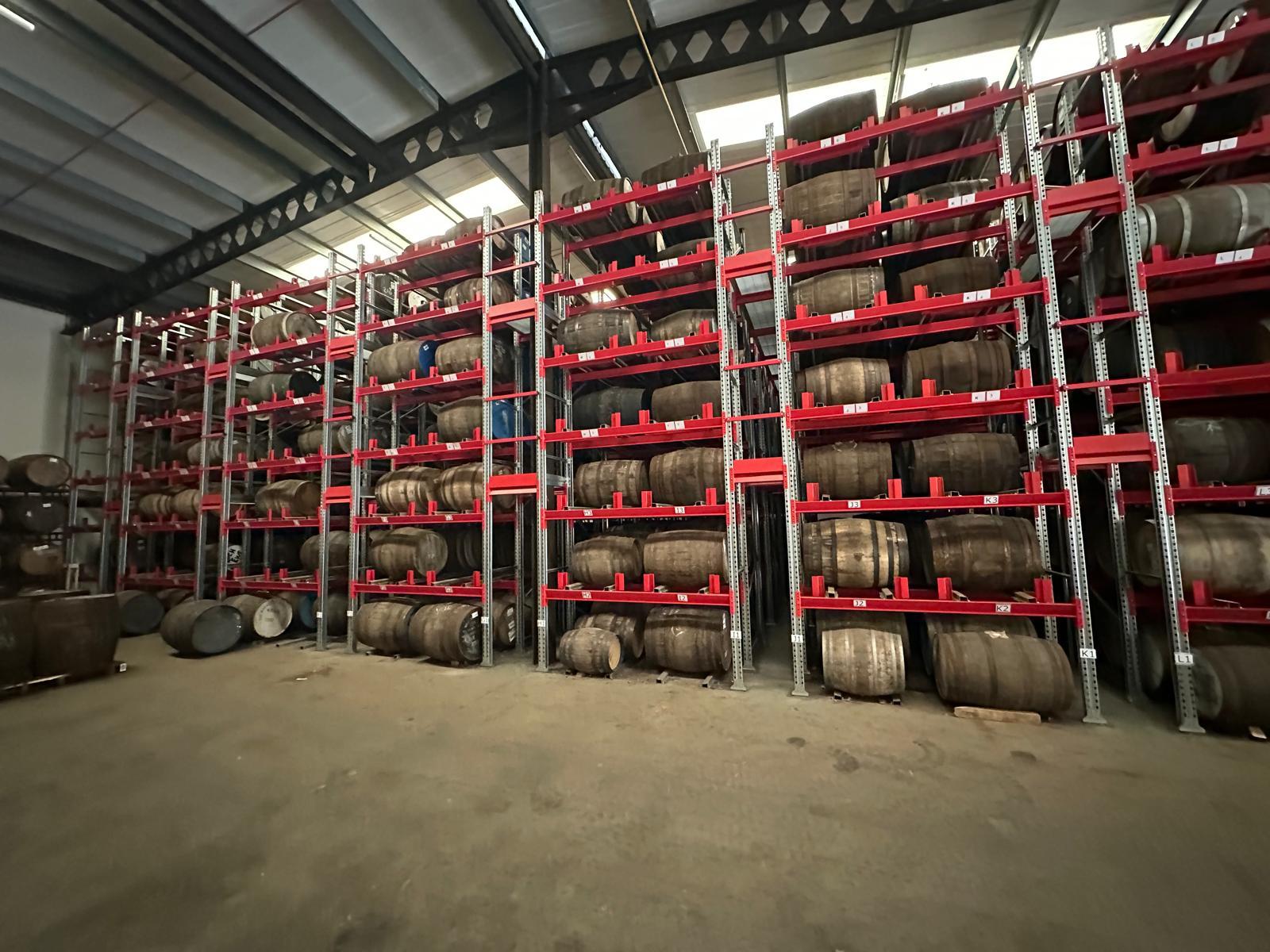
Unlike buying a physical bottle, a whisky cask usually remains inside a bonded warehouse. Ownership changes, but the cask itself rarely moves. That means the paperwork, warehouse records and chain of title become just as important as the cask itself.
Whether you are purchasing your first cask or restructuring an existing portfolio, understanding the transfer process can help you avoid unnecessary delays, unexpected costs and future disputes.
What Does Whisky Cask Ownership Mean?
Owning a whisky cask means holding the legal rights to a specific cask stored within a bonded warehouse. Those rights are supported by documents such as purchase invoices, warehouse records, transfer agreements and, where applicable, regauge reports or re-racking records.
Many first-time buyers assume that receiving an invoice or certificate automatically proves ownership. In reality, those documents form only part of the picture.
The strongest evidence of ownership is a clear chain of title supported by the bonded warehouse's records. If the warehouse has not recognised the transfer, future resale, bottling or collection of the cask can become significantly more complicated.
Why Proper Ownership Transfer Matters
A professionally managed transfer protects both buyer and seller.
For buyers, it provides confidence that the seller has the legal right to sell the cask and that ownership will be recognised by the warehouse.
For sellers, a properly documented transfer reduces the likelihood of disputes after completion and creates a smoother transaction for everyone involved.
Clear ownership records also make future activities much easier, including:
- Selling the cask
- Requesting valuations
- Bottling the whisky
- Arranging insurance
- Managing larger cask portfolios
Good administration today makes every future transaction simpler.
Step 1: Verify the Seller's Ownership
Before agreeing a purchase, confirm that the seller genuinely owns the cask.
This should include checking:
- Distillery
- Fill date
- Cask number
- Cask type
- Current alcohol volume
- Warehouse location
- Most recent regauge (where available)
The seller should also be able to demonstrate that they are the recorded owner or have authority to sell on behalf of the owner.
One of the biggest risks within the secondary cask market is outdated or incomplete ownership records resulting from previous private sales.
Step 2: Review the Ownership History
A whisky cask should have a logical ownership trail.
Typical documents include:
- Original purchase invoice
- Previous transfer agreements
- Warehouse acknowledgements
- Delivery Orders (where applicable)
- Regauge reports
- Re-racking documentation
Small gaps do not automatically indicate a problem, particularly with older casks that have changed hands multiple times. However, the more complete the paperwork, the lower the risk for future buyers.
Step 3: Agree the Commercial Terms
The purchase price is only one part of the transaction.
Before proceeding, both parties should understand:
- Purchase price
- Payment method
- Transfer fees
- Storage charges
- Insurance costs
- Responsibility for outstanding warehouse fees
- Expected transfer timescales
Many ownership transfers are delayed simply because outstanding storage charges have not been settled before the warehouse begins processing the transfer.
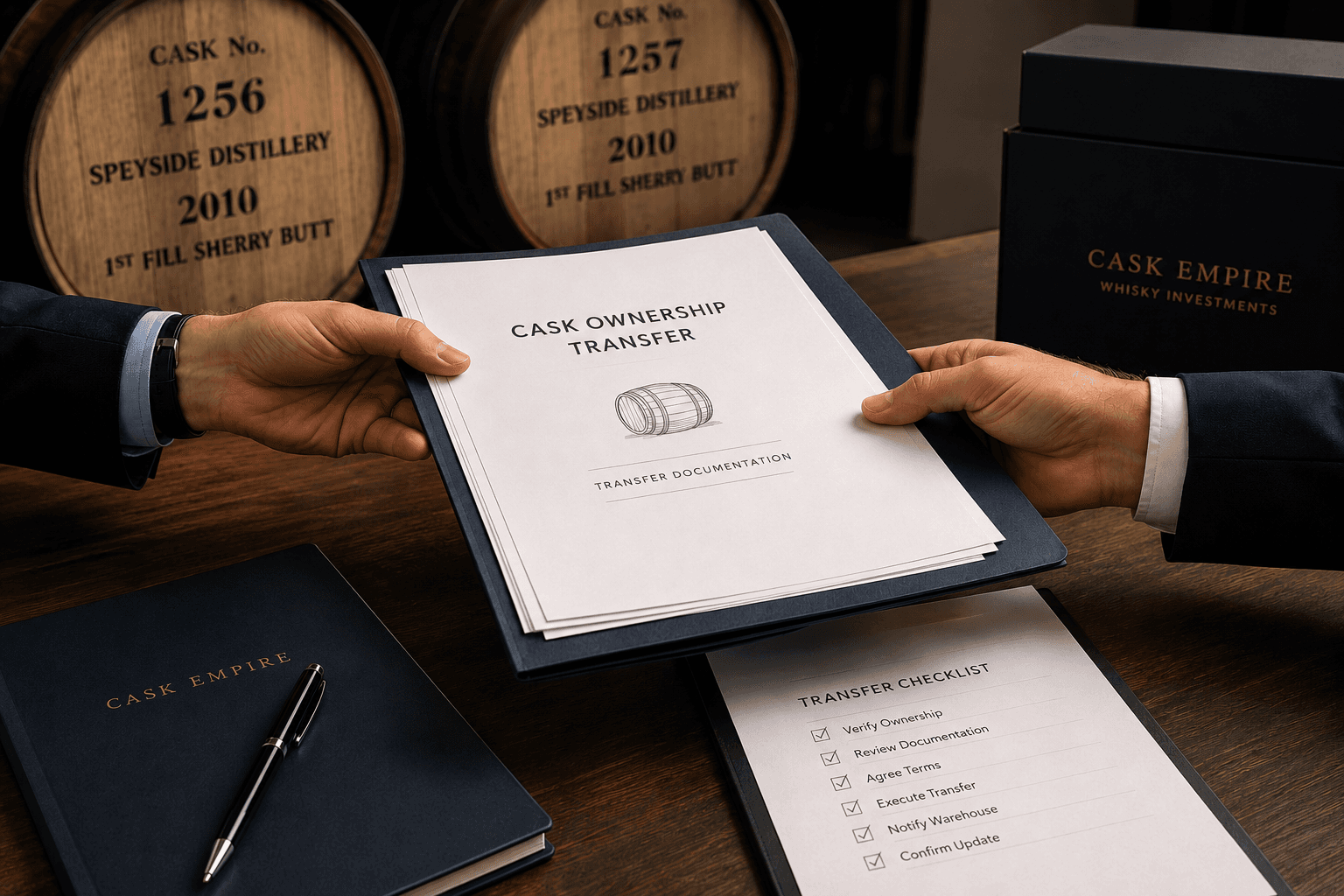
Step 4: Complete the Transfer Documentation
The legal paperwork varies between warehouses and ownership structures, but most transactions require a formal transfer agreement or deed of assignment.
The documentation should clearly identify:
- Buyer
- Seller
- Exact cask details
- Purchase price
- Date of transfer
If the cask is being purchased through a limited company or investment vehicle, this should be established before documentation is prepared. Changing ownership details afterwards often creates avoidable delays.
Step 5: Notify the Bonded Warehouse
Once the paperwork has been completed, the bonded warehouse must update its records.
Depending on the warehouse, this may involve:
- Transfer forms
- Identity verification
- Proof of address
- Anti-money laundering checks
- New account applications
Until the warehouse accepts the transfer, the ownership process is not fully complete from an operational perspective.
Step 6: Obtain Written Confirmation
Never assume ownership has transferred simply because payment has been made.
Request written confirmation from the warehouse showing that the cask is now registered in the buyer's name or nominated entity.
This confirmation becomes one of the most valuable documents within the ownership file and supports future resale, valuation and bottling requests.
Documents Commonly Required
Although every warehouse has slightly different procedures, most transfers involve several supporting documents rather than a single ownership certificate.
These commonly include:
- Purchase invoice
- Sale agreement
- Warehouse transfer form
- Identification documents
- Proof of address
- Payment confirmation
- Regauge reports (if applicable)
- Re-racking records (if applicable)
International buyers may also need additional documentation to satisfy anti-money laundering or compliance requirements.
Common Problems During Ownership Transfers
Most ownership issues arise from administration rather than fraud.
Some of the most common problems include:
Inconsistent paperwork
Small differences between invoices, warehouse records and marketing materials can create unnecessary complications later.
Assuming certificates prove ownership
Certificates can be useful, but warehouse records generally carry greater weight when establishing ownership.
Delays within warehouse administration
Warehouse transfers are administrative processes and rarely happen instantly. Internal approvals, compliance checks and seasonal workloads can all affect processing times.
Unexpected fees
Transfer charges, storage costs, insurance and regauging fees are all legitimate costs within the market, but they should be clearly explained before completion.
Why Professional Transfer Management Adds Value
Private sales can work perfectly well when both parties understand the process.
However, specialist brokers and marketplaces reduce much of the administrative risk by:
- Verifying ownership before marketing
- Reviewing documentation
- Coordinating with bonded warehouses
- Managing transfer paperwork
- Keeping payment and documentation aligned
This creates greater confidence for both buyers and sellers while reducing the likelihood of transactions falling apart after terms have already been agreed.
What Buyers Should Do After Completion
Once ownership has transferred successfully, keep every document together.
Your ownership file should include:
- Purchase invoice
- Transfer agreement
- Warehouse confirmation
- Regauge reports
- Cask specifications
These documents become increasingly valuable if you later decide to sell, insure or bottle the cask.
It is also worth checking that your contact details and ownership information have been recorded correctly within the warehouse system. Small administrative errors are much easier to fix immediately than several years later.
Final Thoughts
Understanding how to transfer whisky cask ownership is ultimately about protecting the value of your investment.
The safest approach is simple:
- Verify the seller's authority.
- Match every cask detail across the paperwork.
- Use documentation accepted by the bonded warehouse.
- Wait for written confirmation before considering the transfer complete.
The process may feel administrative, but strong ownership records are one of the foundations of a well-managed whisky cask portfolio.
When title is clear from the beginning, buying, selling, insuring and eventually exiting the investment becomes significantly easier.