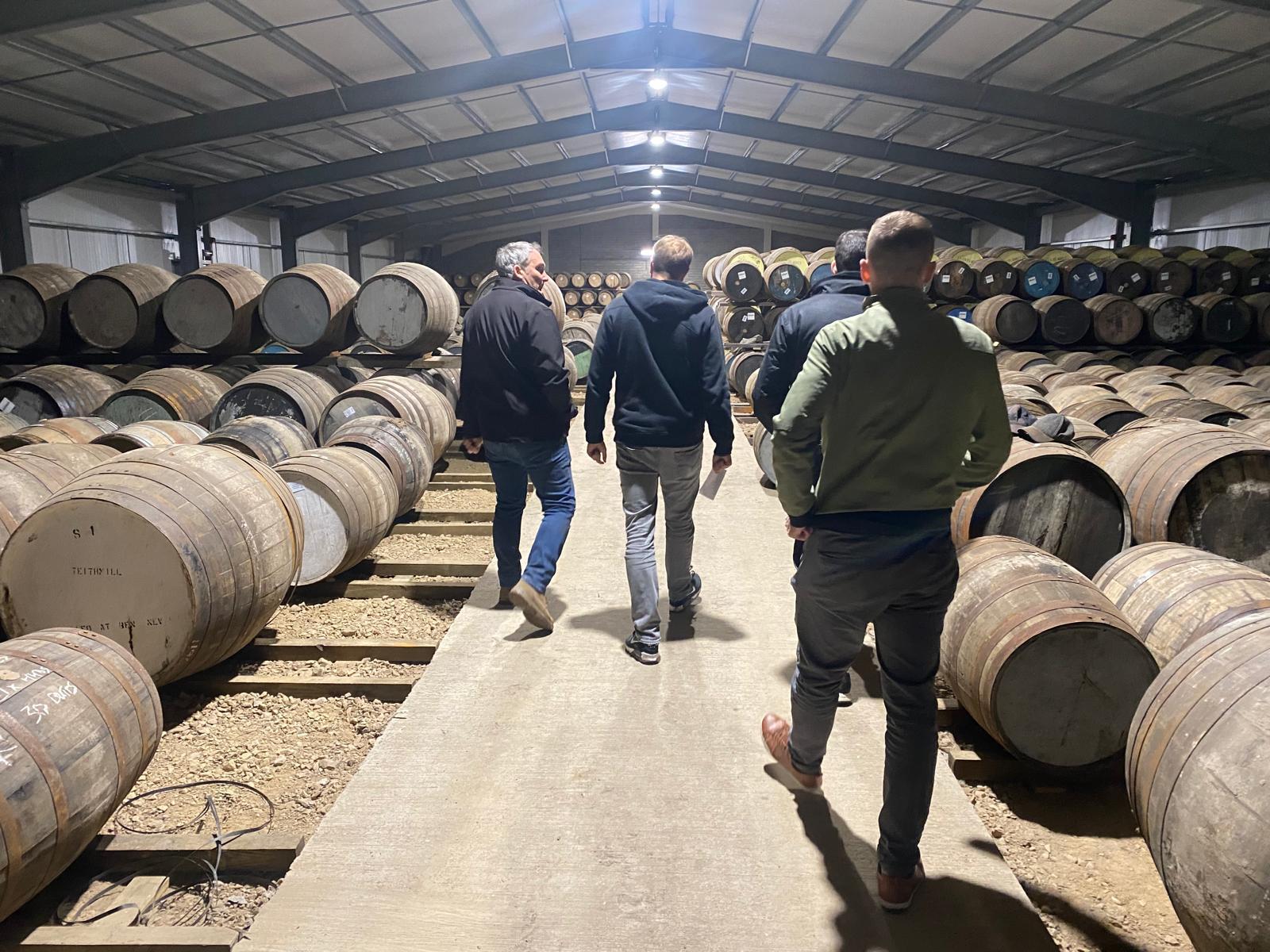
Not all whisky casks are the same size.
Understanding the difference between barrels, hogsheads and butts is essential when comparing purchase prices and estimating future bottling volumes.
The Bourbon Barrel
A standard American bourbon barrel commonly holds approximately 200 litres.
These barrels are widely used for Scotch whisky maturation after their original use in the American whiskey industry.
Their relatively small size creates a larger wood-to-spirit ratio than many larger cask formats.
The Hogshead
A traditional Scotch whisky hogshead commonly holds approximately 250 litres.
Hogsheads are often constructed from the staves of bourbon barrels, with additional material used to increase their capacity.
They are particularly common throughout the Scotch whisky industry.
The Sherry Butt
A sherry butt commonly holds approximately 500 litres.
These larger casks are frequently associated with sherry-influenced maturation.
Because of their capacity, butts may contain considerably more spirit than barrels or hogsheads.
However, the actual volume remaining depends on filling history, maturation losses and the latest regauge.
Comparing Cask Sizes
| Cask Type | Typical Capacity |
|---|---|
| Bourbon barrel | 200 litres |
| Hogshead | 250 litres |
| Sherry butt | 500 litres |
| Puncheon | Approximately 500 litres |
| Port pipe | Approximately 550 to 650 litres |
These capacities are approximate. Actual cask sizes vary.
Why Does Size Matter Financially?
Imagine three casks filled at 63.5% ABV:
Barrel: 200 litres × 63.5% = 127 litres of pure alcohol.
Hogshead: 250 litres × 63.5% = 158.75 litres of pure alcohol.
Butt: 500 litres × 63.5% = 317.5 litres of pure alcohol.
These are theoretical filling quantities, not current regauged volumes.
A buyer purchasing a larger cask may receive substantially more whisky, but the purchase price and future costs are also likely to differ.
Does Bigger Mean Better?
Not necessarily.
Smaller casks generally provide more wood surface area relative to the volume of spirit, potentially increasing the influence of maturation.
Larger casks may offer greater total volume and different maturation characteristics.
The correct choice depends on the desired flavour profile, commercial objectives and purchase price.
The Bottom Line
Cask size is a fundamental part of whisky valuation.
Buyers should compare casks using their current RLA rather than relying exclusively on nominal capacity or headline price.