How Digitisation Is Changing Whisky Cask Ownership
A whisky cask can mature securely in a bonded warehouse for decades. But the information surrounding that cask and its ownership, provenance, valuation, warehouse records and eventual resale has traditionally been far less straightforward.
Evidence can be spread across invoices, warehouse records, delivery orders, certificates and years of correspondence.
That is where cask digitisation comes in.
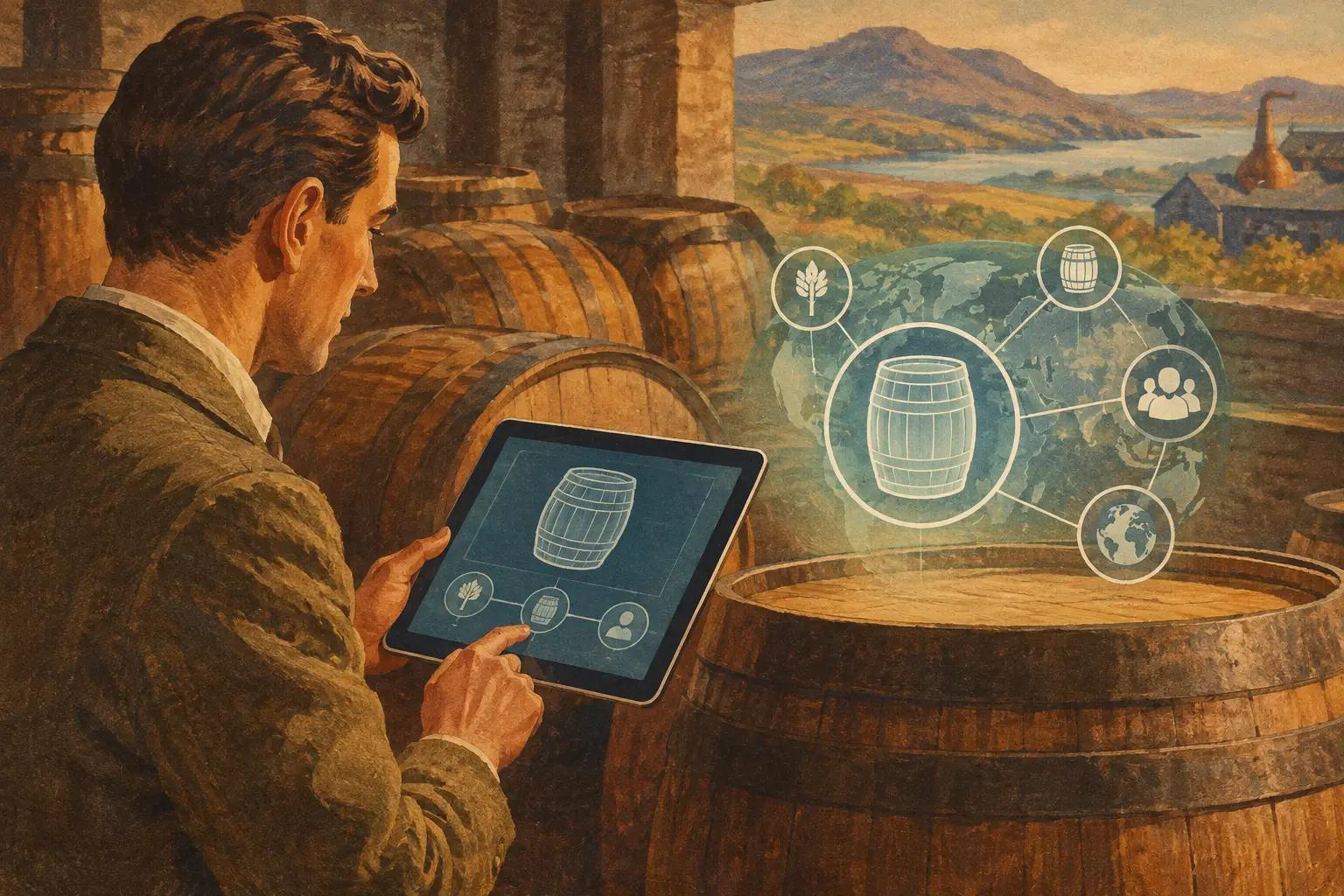
Digitisation does not turn whisky into a digital asset. The physical cask remains the asset. Instead, it brings the information and processes surrounding that cask into a more structured system.
For buyers, that can mean greater transparency before committing capital. For existing owners, it can mean easier portfolio management and a clearer route to market when the time comes to sell.
As whisky cask ownership becomes increasingly accessible to buyers around the world, this infrastructure could play an important role in making the market more transparent and easier to navigate.
What Does Whisky Cask Digitisation Actually Mean?
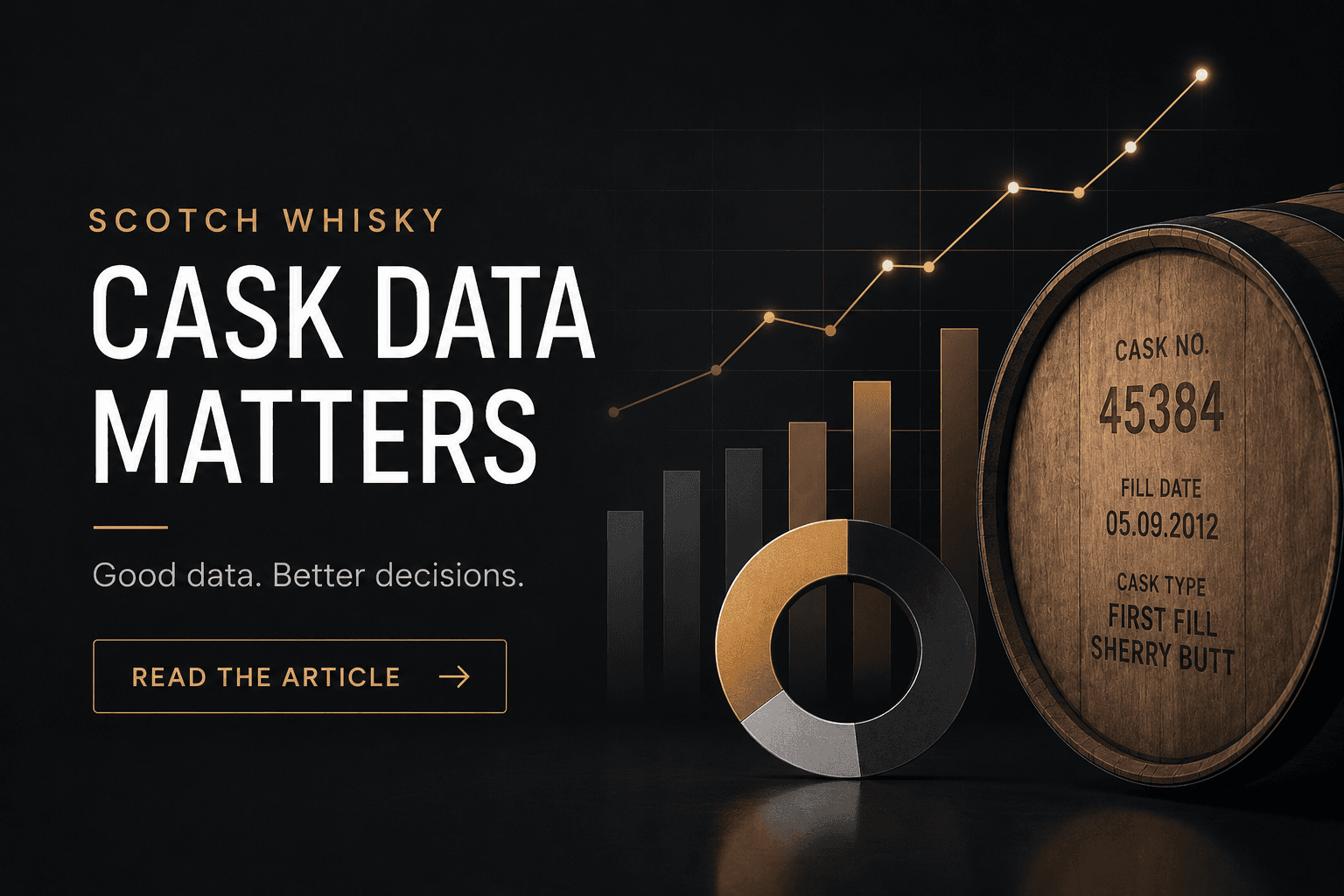
Cask digitisation is the structured use of digital records and workflows to manage a whisky cask throughout its ownership journey.
A properly documented cask should be connected to key information including:
Distillery
Where the whisky was produced.
Cask number
The individual identifier associated with the cask.
Filling date
When the spirit entered the cask.
Cask type
For example, an ex-bourbon barrel, hogshead or sherry butt.
Volume
The original or most recently measured quantity of liquid remaining.
Alcoholic strength (ABV)
An important measurement that can change as whisky matures.
Warehouse location
Where the physical cask is currently stored.
These details should then be supported by appropriate documentation.
Depending on the warehouse and ownership structure, that could include purchase invoices, warehouse records, delivery orders, certificates of ownership or transfer confirmations.
The important distinction is that a digital record should support the underlying evidence and not replace it.
Why Whisky Cask Ownership Needs Digitisation
The Scotch whisky cask market has traditionally relied heavily on specialist knowledge, brokers and trusted relationships.
There is considerable value in that expertise.
Understanding distillery demand, maturation, cask quality, warehouse practices and achievable market prices requires knowledge that cannot simply be replaced by software.
However, relationship-driven markets can also be difficult for new buyers to navigate.
Information may be fragmented. Valuation methodologies can be unclear. And the process of eventually selling a cask can appear considerably more complicated than buying one.
Digitisation can help standardise the factual foundation on which these decisions are made.
Instead of relying solely on conversations and disconnected documents, buyers can potentially see a clearer picture of the asset they are considering.
Existing owners can benefit too.
An owner may know exactly what they hold but have limited visibility over current buyer demand, valuations or available routes to resale.
A more structured marketplace can help connect those two sides.
Digitisation Should Make Ownership Clearer
A professional online listing can make a whisky cask easier to understand.
But a listing is not proof of ownership.
Before purchasing a whisky cask, a buyer should understand:
- Where is the cask stored?
- What documentation supports its existence and ownership?
- What document will evidence the transfer?
- How will the warehouse process or recognise the change of ownership?
- What role is the broker or marketplace actually performing?
You can read more about this in our guide to transferring whisky cask ownership.
A strong digital process should make these distinctions clearer.
It can record the cask specification, preserve relevant documentation and establish an agreed process for payment and transfer.
That does not mean every document should be publicly available. Ownership documents can contain commercially sensitive or personal information.
Instead, the objective should be to make the appropriate verified information available to the appropriate parties during due diligence and completion.
For high-value casks in particular, speed should never come at the expense of verification.
Better Valuations and a Clearer Route to Resale
Whisky cask valuation is more complicated than simply looking at the distillery name and age.
Buyer appetite can be influenced by factors including:
- Distillery
- Age
- Cask type
- Current volume
- Alcoholic strength
- Cask condition
- Storage history
- Brand demand
- Bottling potential
- Broader market conditions
Digitisation allows more of this information to be brought together when assessing a cask.
That can support more disciplined valuations and make it easier to determine whether a seller's expectations reflect current market demand.
It can also make the resale process more efficient.
A cask with organised documentation, current specifications and clear ownership records can be introduced to prospective buyers more efficiently than one requiring repeated clarification of basic information.
However, owners should still understand an important limitation:
Whisky casks are not exchange-traded assets.
There is no guarantee that a buyer will be available at a particular price or at the exact moment an owner wants to sell.
Digitisation can reduce friction around a sale. It cannot guarantee liquidity.
The Warehouse Still Matters
No matter how sophisticated a digital platform becomes, the physical cask remains in a warehouse.
Most privately owned Scotch whisky casks are held in a bonded warehouse, where the spirit remains under the applicable duty-suspension arrangements until it leaves bond.
The warehouse therefore plays an important role in cask administration.
Digital infrastructure can make it easier to organise and monitor information such as:
Ownership and transfer records
Keeping a clear record of changes relating to the cask.
Storage charges
Tracking ongoing warehouse costs.
Insurance
Recording relevant insurance arrangements.
Regauges
Updating the measured volume and alcoholic strength of the cask.
Cask movements
Recording when a cask is moved, reracked, bottled or otherwise altered.
For somebody owning several whisky casks, this can transform a collection of individual emails, invoices and documents into a more manageable portfolio.
But the digital record must always reflect what has actually happened at warehouse level.
If a warehouse has not processed or recognised a transfer, a marketplace dashboard should not be treated as independent confirmation that the warehouse's records have changed.
What Digitisation Cannot Do
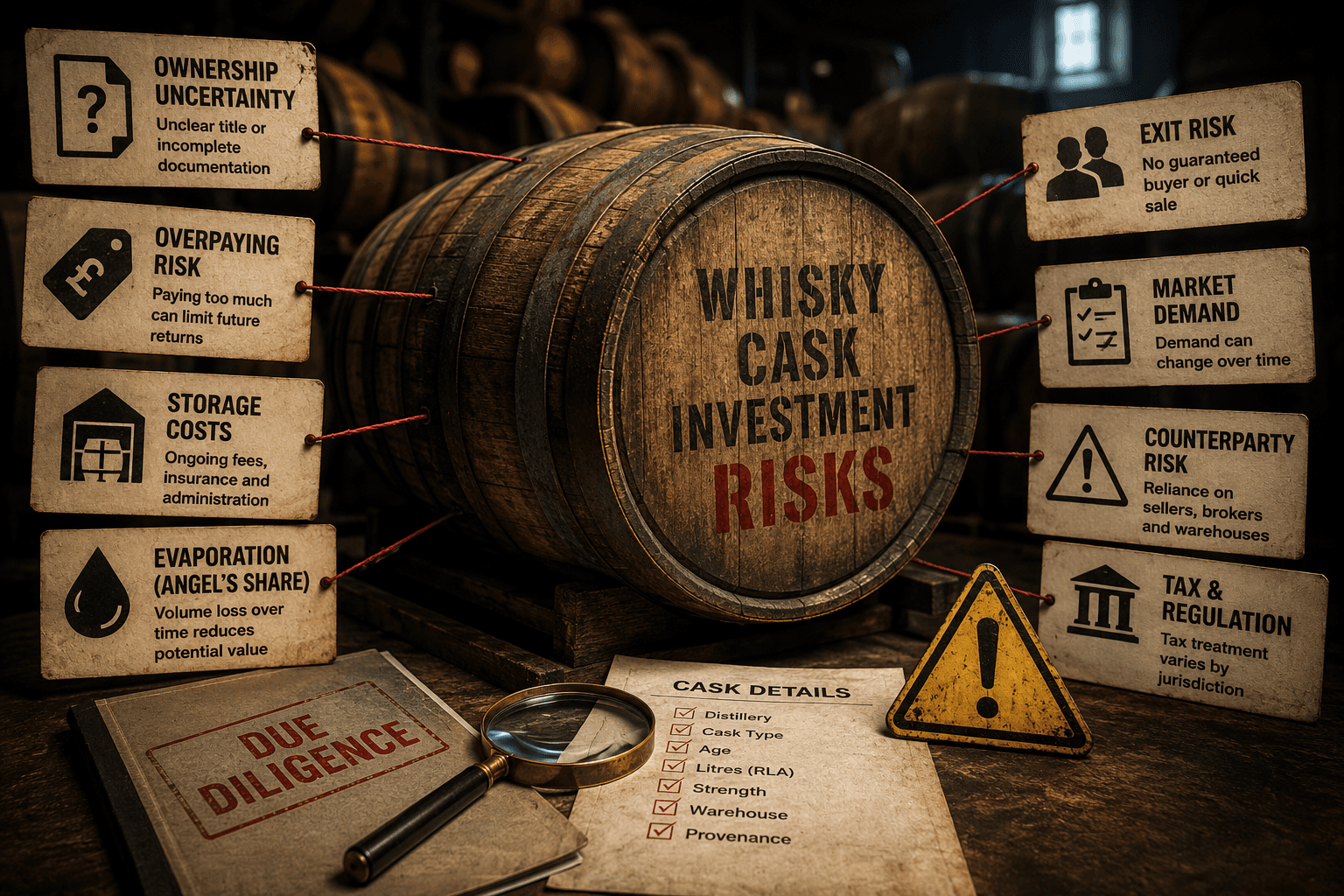
Greater transparency does not remove the risks associated with whisky cask ownership.
The value of a cask can rise or fall.
There may not be a buyer available when an owner wishes to sell.
There can also be ongoing costs associated with ownership, including storage, insurance, transfers, regauging and management.
You can read our full breakdown in Whisky Cask Fees Explained.
There are also risks specific to the physical asset.
Whisky naturally evaporates during maturation, commonly known as the "Angel's Share", meaning both volume and alcoholic strength can change