Scotch Whisky Cask Data: Why Good Records Matter More Than the Story
A scotch whisky cask can look attractive at first glance. A well-known distillery, an impressive fill date and a competitive asking price often generate immediate interest. In practice, those details only tell part of the story. The quality of the records behind the cask is what determines whether it can be valued accurately, transferred efficiently and resold with confidence.
For buyers, reliable data reduces uncertainty. For sellers, it strengthens credibility and helps support pricing. Whether you are purchasing your first cask or managing a larger portfolio, the documentation behind the asset is just as important as the spirit itself.
What Scotch Whisky Cask Data Should Include
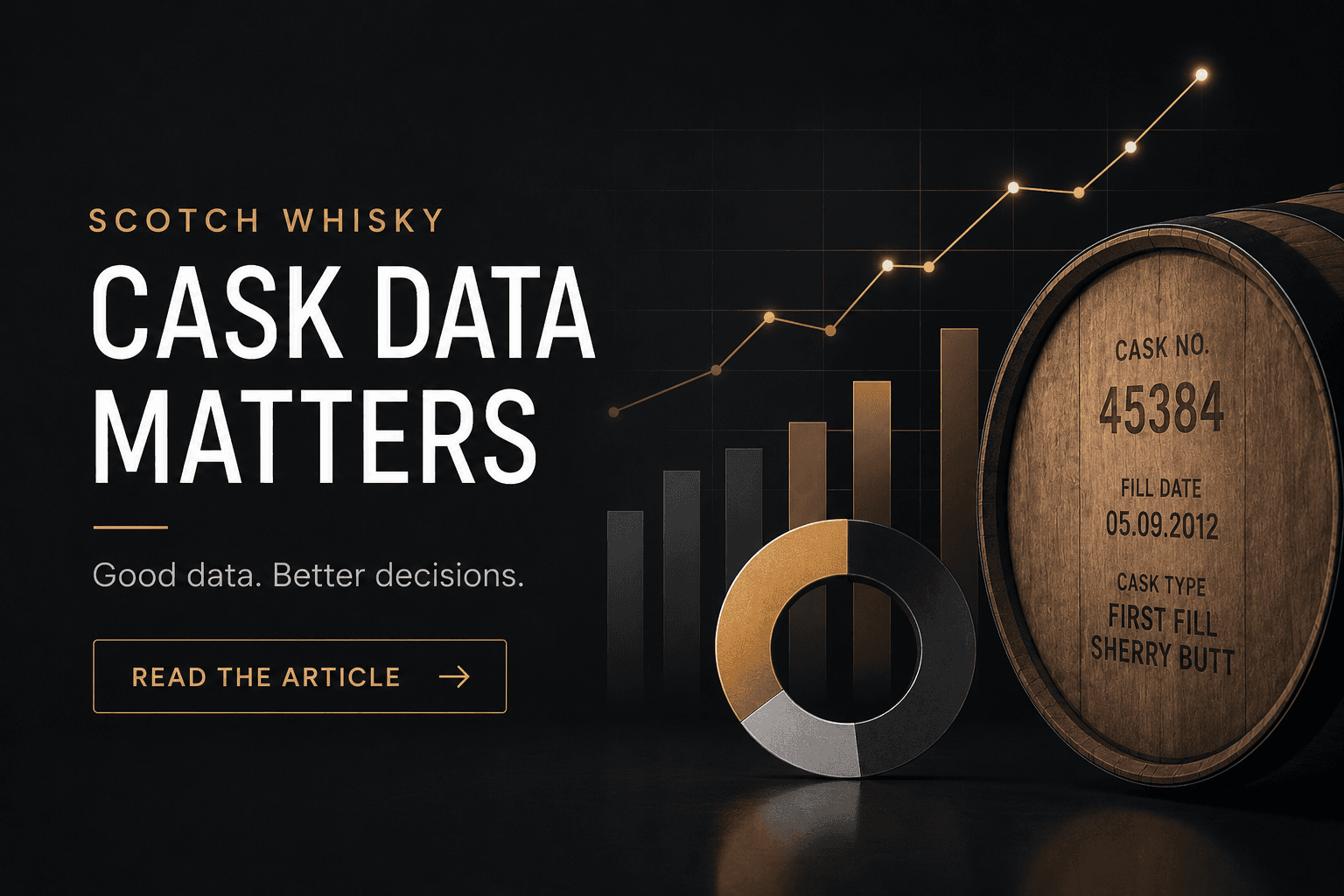
Every cask should have a clear identity supported by accurate records. At a minimum, buyers should expect to see:
- Distillery
- Cask number
- Cask type
- Fill date
- Original litres of alcohol (OLA)
- Current regauged litres of alcohol (RLA)
- Current ABV
- Bonded warehouse location
These are not administrative details. They form the basis of valuation, ownership verification and future transfer.
The strongest records also include recent regauge reports, delivery orders, warehouse confirmations, ownership history and details of any reracking or movement between bonded warehouses. If a cask has been sampled, repaired or regauged, that information should be clearly documented.
Why Good Data Protects Value
A cask is only as valuable as the evidence supporting it.
Age, distillery reputation and cask type all influence pricing, but buyers cannot assess those factors properly without reliable data. Two casks from the same distillery and vintage can command very different prices because of differences in liquid volume, alcohol strength or cask history.
For example, an older cask may appear highly desirable, but if the latest regauge shows significant evaporation or a declining ABV, its commercial value may differ considerably from expectations.
Likewise, a first-fill sherry butt will generally trade differently to a refill hogshead, but only if those details are accurately recorded.
The less certainty buyers have, the more risk they price into the transaction.
The Documents Every Buyer Should Request
Before committing to any purchase, buyers should confirm three key areas:
Ownership
The seller should be able to demonstrate legal ownership through recognised warehouse documentation, such as a Delivery Order or transfer confirmation.
Warehouse Records
The bonded warehouse should be clearly identified, with records confirming the cask's current location and status.
Latest Regauge
The most recent regauge provides the current litres of alcohol and ABV, allowing buyers to assess today's value rather than relying on outdated figures.
Where relevant, buyers should also ask whether the cask has been reracked, repaired, moved between warehouses or experienced any unusual losses.
Common Problems With Cask Records
Not every listing is supported by the same level of documentation.
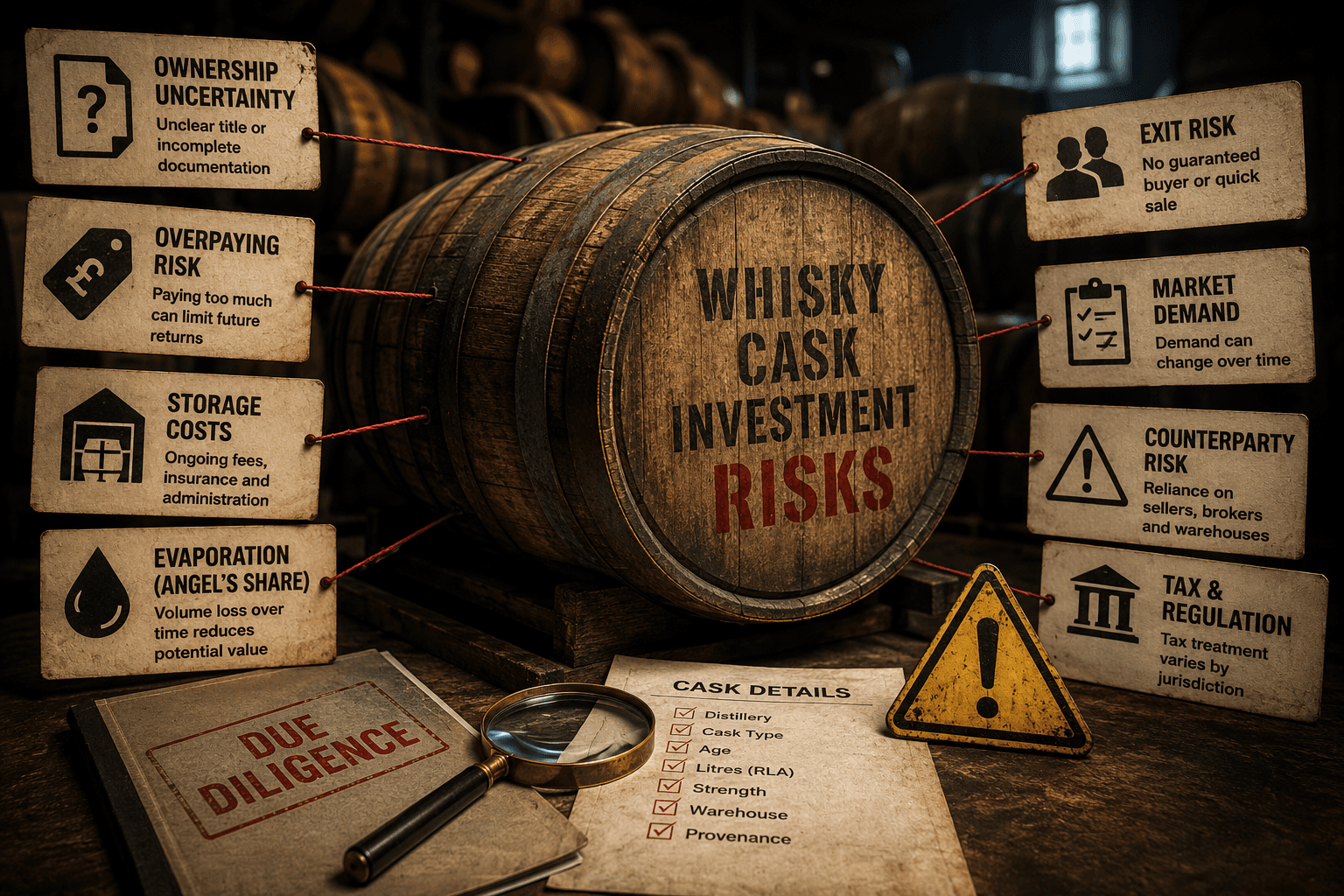
Some sellers provide current warehouse-backed records immediately. Others rely on outdated invoices, old regauges or incomplete broker summaries that leave important questions unanswered.
Common issues include:
- Outdated regauge information
- Incorrect cask references
- Missing ownership records
- Unclear warehouse status
- Undisclosed storage or transfer fees
None of these automatically make a cask unsuitable, but they do increase uncertainty and should be reflected in both pricing and due diligence.
Why Better Records Make Resale Easier
Good documentation does not only help at the point of purchase. It becomes an asset when you decide to sell.
A cask supported by clear records is easier to verify, easier to market and generally easier to transfer. Buyers spend less time resolving administrative issues and more time making commercial decisions.
Poor documentation has the opposite effect. Even a desirable cask can become difficult to sell if ownership or warehouse records cannot be confirmed quickly.
Assessing Cask Data Without Being an Expert
Most buyers do not need detailed knowledge of warehouse operations. They simply need a structured approach.
Start by confirming:
- The identity of the cask
- Current ownership
- Bonded warehouse location
- Latest liquid position
If any of those areas are unclear, ask why.
Then consider whether the records would give confidence to a future buyer. If the answer is no, you may be buying unnecessary administration risk alongside the cask itself.
Clear Records Create Better Decisions
Reliable cask data benefits everyone involved.
Buyers can compare opportunities with greater confidence. Sellers can justify asking prices with supporting evidence. Ownership transfers become smoother, and future resale is far easier to manage.
In a market where transparency is not always consistent, strong documentation becomes a competitive advantage.
If you are considering a Scotch whisky cask, do not focus solely on the distillery or the age statement. Look at the records behind the asset. In many cases, the quality of the documentation tells you just as much about the investment as the whisky itself.