Cask Brokers Comparison: What to Look for Beyond Price
Comparing whisky cask brokers is not simply about finding the lowest price.
Two brokers may offer apparently similar Scotch whisky casks for £5,000, yet provide very different levels of verification, ownership documentation, bonded warehouse coordination and support when it comes time to sell.
Those differences matter. A whisky cask may be held for 5, 10 or even 20 years, making the broker you choose part of a much longer process than the initial purchase.
Whisky casks are not standardised retail products. Their value can be influenced by the distillery, age, fill date, cask type, bulk litres, alcoholic strength, warehouse location, condition and market demand when the owner eventually decides to sell.
A good cask broker should therefore do more than introduce a buyer to available stock. The transaction should be credible, documented and manageable from acquisition through to eventual resale.
This guide explains what to consider when comparing whisky cask brokers, from verification and pricing to fees, ownership transfer and exit options.
What Does a Whisky Cask Broker Actually Do?
The term "cask broker" covers several different business models.
Some businesses primarily market casks before passing administration to another party. Others coordinate transactions between buyers, sellers and bonded warehouses. Some also provide ongoing portfolio support and help owners return their casks to the market when they decide to sell.
Understanding that distinction is important.
An experienced buyer with established warehouse relationships may only require access to stock and transaction support.
A first-time buyer may place greater value on verification, documentation, warehouse coordination and ongoing assistance.
Before choosing a broker, ask exactly what role they perform.
Do they own the cask being offered?
Are they representing the seller?
Are they sourcing stock on behalf of the buyer?
Do they operate a marketplace connecting buyers and sellers?
Who verifies the documentation?
Who communicates with the bonded warehouse?
Who coordinates the ownership transfer?
Clear answers to these questions help establish exactly what service you are paying for.
Cask Brokers Comparison: The Criteria That Matter
Price matters, but it should never be considered in isolation.
A lower purchase price may become less attractive if it comes with unclear ownership documentation, expensive storage arrangements or limited options when you eventually want to sell.
Equally, a higher price may reflect stronger provenance, recent warehouse records, desirable cask characteristics or additional transaction support.
When comparing whisky cask brokers, there are several areas worth examining.
1. Verification and Provenance
Start with the identity of the cask.
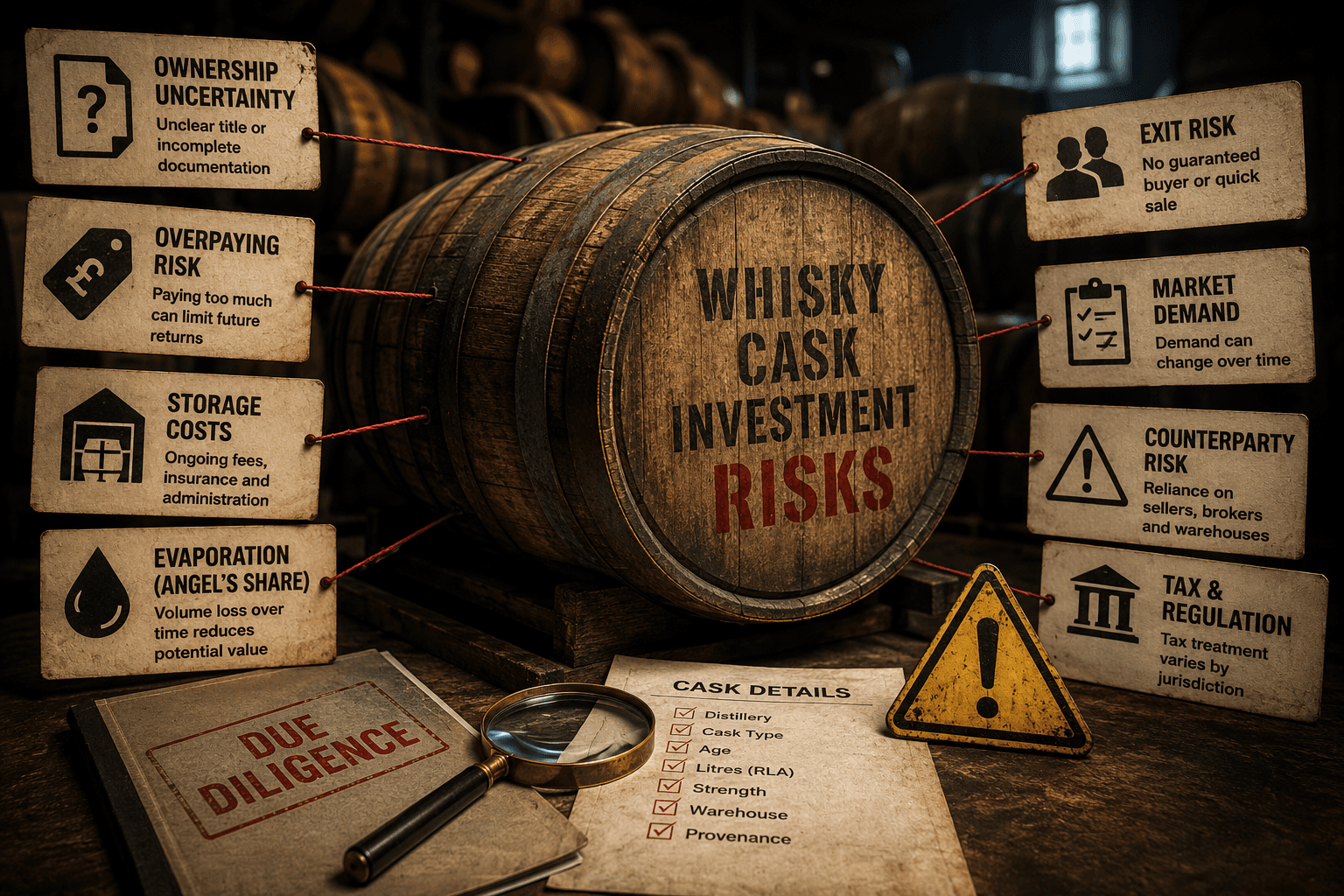
Before committing funds, you should understand key information including:
• Distillery
• Cask number
• Cask type
• Fill date
• Current bulk litres
• Alcohol by volume where available
• Regauge information where available
• Bonded warehouse location
The documentation available will vary depending on the age and history of the cask.
What matters is that the broker clearly distinguishes between information they have independently verified and information supplied by the seller.
The seller's right to sell the cask should also be established.
This becomes particularly important in the secondary market, where a cask may have changed ownership several times.
Verification cannot eliminate every risk associated with purchasing a whisky cask. It can, however, help establish that the asset being advertised, the party selling it and the proposed ownership transfer are consistent with the available records.
At Cask Empire, verification forms part of the marketplace process, helping buyers understand what they are purchasing before a transaction proceeds.
2. Pricing and Market Evidence
No responsible cask broker can guarantee the future value of a whisky cask.
Prices can be affected by distillery reputation, age, cask type, maturation, bottler demand, available supply and broader demand within the whisky market.
Casks can also take time to sell, particularly if the asking price is above what buyers are currently willing to pay.
Rather than asking only whether a cask is a "good investment", ask how the asking price was established.
Pricing evidence might include:
• Recent comparable transactions
• Current buyer demand
• Dealer or bottler offers
• Similar casks currently available
• Historical pricing information
• Internal valuation models
Comparable evidence needs to be genuinely comparable.
A first-fill sherry butt from one distillery cannot necessarily be compared directly with a refill hogshead from another, even if both were filled in the same year.
The distillery, cask type, volume, alcohol strength, age and condition can all influence what a buyer is prepared to pay.
It is also important to distinguish between an indicative valuation and an achievable sale price.
A valuation is an estimate.
An achievable sale price is ultimately determined by what a buyer is prepared to pay when the cask is actually offered to the market.
3. Fees and Total Holding Costs
The purchase price is only one component of the cost of owning a whisky cask.
Before buying, ask for a clear breakdown of potential charges.
These may include:
• Purchase commission or broker spread
• Marketplace fees
• Annual bonded warehouse storage
• Insurance
• Ownership transfer charges
• Regauging
• Samples
• Administrative charges
• Resale commission
Fees themselves are not necessarily a concern.
Warehousing, insurance, admini