What Actually Happens in a Whisky Cask Warehouse Every Day?
For most private whisky cask owners, the warehouse is the least visible part of ownership.
You buy a cask. You receive your paperwork. Then the cask may sit in Scotland for years.
But it isn't simply abandoned in a dark warehouse until somebody decides to sell or bottle it.
A Scotch whisky warehouse is a regulated working environment where casks are received, recorded, moved, inspected, sampled, regauged, repaired and eventually dispatched.
And with around 22 million casks currently maturing in Scotland, warehousing is a huge part of the Scotch whisky industry.
So what actually happens inside one on a normal day?
First: What Is a Bonded Whisky Warehouse?
Scotch Whisky must be matured in Scotland for at least three years, and maturation must take place in an excise warehouse or another permitted location under HMRC control.
That means the warehouse isn't simply rented storage space.
It operates within a regulated excise system.
Casks can contain significant amounts of alcohol on which duty has not yet been paid, so movements, sampling and stock records need to be controlled.
For a private cask owner, this is important because your warehouse is effectively the physical custodian of the asset.
1. Casks Arrive at the Warehouse
One of the most visible daily activities is movement.
Casks arrive from:
- Distilleries
- Other bonded warehouses
- Filling facilities
- Cooperages
- Re-racking operations
Whisky logistics involves the movement of both full and empty casks, often alongside bulk spirit transported by tanker.
When casks arrive, warehouse staff need to make sure the physical stock matches the associated records.
That can include checking:
- Cask number
- Distillery
- Fill date
- Cask type
- Contents
- Ownership or account information
- Warehouse movement documentation
From an owner's perspective, this is why identifying your exact cask matters.
A Scotch whisky cask should not simply exist as “one cask of whisky”.
It should have a traceable identity.
2. Casks Are Moved and Stored
Once received, the cask has to be put somewhere.
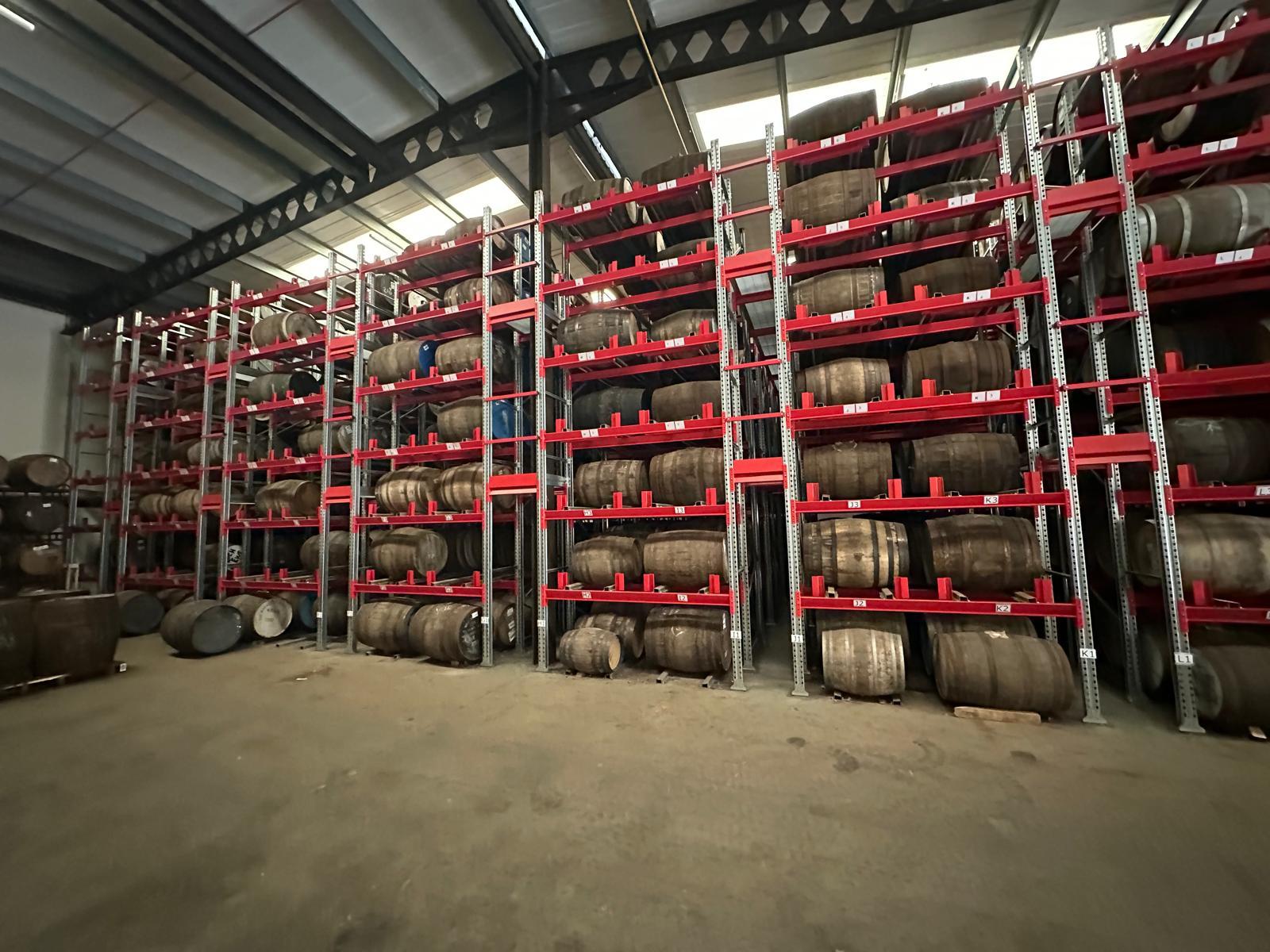
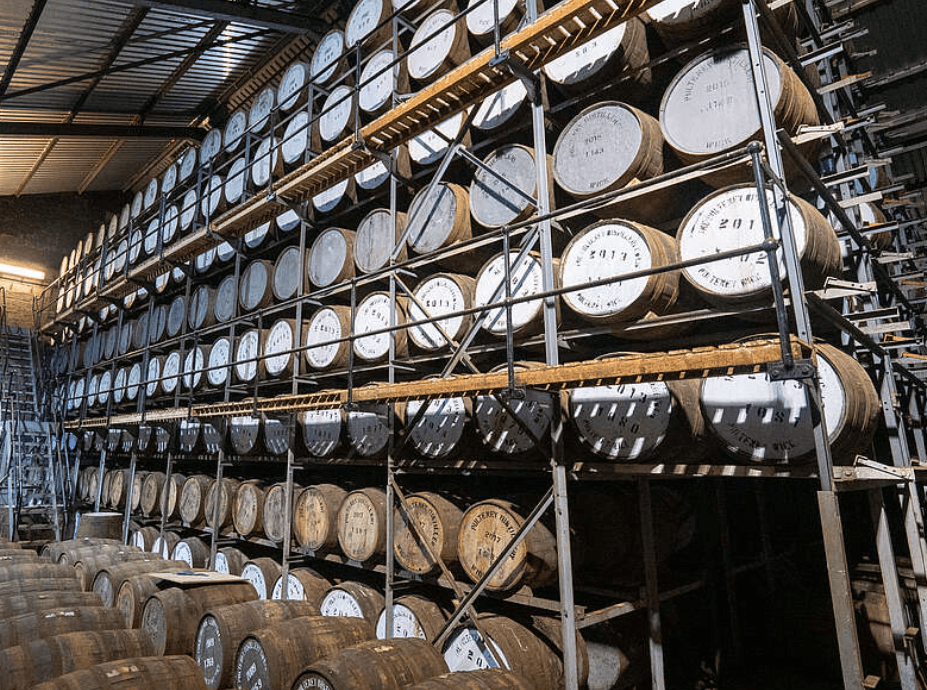
Depending on the warehouse, casks may be stored in traditional dunnage warehouses, palletised warehouses or modern racked facilities.
Moving whisky casks is physical work.
A typical barrel can weigh hundreds of kilograms when full, so warehouse teams use specialist handling equipment and established procedures to move stock safely.
Casks may need to be moved because they are:
- Entering storage
- Leaving the warehouse
- Being sampled
- Being regauged
- Being transferred
- Being re-racked
- Being prepared for bottling
Movement under bond is strictly controlled and can only be carried out by authorised operators.
That is one reason cask owners cannot normally just arrive at a warehouse and take their barrel away.
3. Casks Are Regauged
One of the most important warehouse operations for a private owner is a regauge.
A regauge is essentially a health check on your cask.
The warehouse measures its current:
- Volume
- Alcohol strength or ABV
This tells you how much liquid remains and how the cask has changed during maturation.
Warehouses such as Cask Trade describe regauging as measuring the current volume and ABV of a cask.
This becomes increasingly important as a cask gets older.
Whisky naturally evaporates during maturation.
The Scotch Whisky Association estimates that a cask loses roughly 2% of its contents per year through evaporation, although the actual rate can vary considerably depending on the cask and warehouse conditions.
This evaporation is commonly called the Angel's Share.
For an owner, a regauge can help answer a very simple question:
What exactly do I own today?
4. Samples Are Drawn
Another common warehouse service is sampling.
A small amount of liquid can be extracted from the cask for purposes such as:
- Quality control
- Sensory analysis
- Checking maturation
- Preparing for a potential sale
- Evaluating the cask before bottling
HMRC rules allow authorised samples to be taken, but removals must be properly recorded.
Records can include the sample identity, quantity, strength, date and reason it was drawn.
For private owners, samples can be particularly useful before making an exit decision.
A potential buyer or independent bottler may want to understand:
- Colour
- Nose
- Palate
- Maturation quality
- Whether further ageing could be beneficial
A cask is ultimately not just a number on a spreadsheet.
The liquid itself matters.
5. Casks Are Checked for Leaks and Damage
Wood is a natural material.
Casks can leak.
Hoops can loosen.
Staves can become damaged.
Bungs can require attention.
Warehouse teams therefore have to monitor physical stock and deal with issues where necessary.
In some cases, a cooper may repair the existing cask.
In others, the whisky may need to be transferred into another suitable cask.
The management of casks throughout their lifecycle includes maintenance, repair, filling and storage, as well as monitoring their condition and performance.
This is one of the less glamorous but most important parts of whisky maturation.
Your whisky could be worth thousands of pounds.
But it is still being held inside a wooden container.
6. Some Whisky Is Re-racked
Not every cask spends its entire life in the same barrel.
A warehouse may be instructed to re-rack whisky.
That means transferring the liquid from one cask into another.
This can be done to influence maturation.
For example, whisky may move from an ex-bourbon barrel into a sherry, wine or other permitted cask for a finishing period.
Cask Trade describes re-racking as transferring whisky into a new cask to achieve a particular flavour or colour profile.
There are specific rules governing which casks can be used for Scotch Whisky maturation and finishing.
For investors, re-racking should not simply be viewed as a way of making a cask “more valuable”.
It changes the whisky.
The quality of the underlying spirit and the suitability of the new cask still matter.
7. Ownership Records Are Updated
This is one of the warehouse's most important jobs from a private owner's perspective.
When a cask changes hands, the warehouse records may need to be updated to reflect the new owner or the relevant account holder.
Historically, this has commonly been done through a Delivery Order, although other forms of documentation may also be accepted depending on the warehouse.
The Scotch Whisky Association specifically recommends ensuring that the warehousekeeper recognises and records the transfer of ownership.
This distinction matters.
Imagine two people both receive attractive PDF certificates saying that they own a cask.
The most important question is:
What does the warehouse say?
At Cask Empire, this is why we place so much importance on warehouse-level ownership and documentation.
The marketplace can facilitate the transaction.
But the physical cask exists independently inside the bonded warehouse.
8. Casks Leave for Bottling or Another Warehouse
Eventually, some casks leave.
They may be:
- Sold to another owner
- Transferred to another warehouse
- Sent for blending
- Sent for bottling
- Used by an independent bottler
- Moved for further maturation
Single Malt Scotch Whisky must be bottled in Scotland, and excise duty will generally become relevant when whisky leaves bond for consumption.
Again, movements aren't casual.
The paperwork needs to match the physical movement.
What Doesn't Happen Every Day?
One misconception is that somebody is constantly checking your individual cask.
They aren't.
If your cask is quietly maturing without an instruction to move, sample or regauge it, it may remain largely untouched.
And that's normally exactly what you want.
Whisky maturation takes time.
The warehouse's role is not to interfere with every cask every day.
It is to create a secure and controlled environment where millions of casks can mature while maintaining accurate records and carrying out operations when required.
What Does This Mean for a Private Cask Owner?
The biggest lesson is simple:
Your warehouse matters almost as much as your broker or marketplace.
Before buying a whisky cask, you should know:
- Which warehouse physically holds it
- The cask number
- What type of cask it is
- When it was filled
- Its latest volume and ABV where available
- How ownership is recorded
- What storage charges apply
- What sampling and regauging cost
- Whether you can transfer or sell the cask independently
The Scotch Whisky Association recommends that purchasers identify both the warehouse and warehousekeeper before buying and understand the associated storage costs.
Why Warehouse-Level Ownership Matters
A whisky cask may change broker.
It may change marketplace.
It may change owner several times.
But throughout that process, the whisky continues ageing inside Scotland.
That is why Cask Empire's approach focuses on the underlying physical asset rather than simply creating an investment account on a platform.
When you purchase a qualifying cask through Cask Empire, the objective is to ensure the transaction results in recognisable ownership of an identifiable cask held in bond.
That means the asset does not exist simply because Cask Empire says it does.
There is a real cask.
Inside a real warehouse.
Containing real whisky.
And while you're getting on with your daily life, that warehouse is quietly doing its job in the background.
The Bottom Line
Whisky warehouses aren't simply rooms filled with barrels.
They are working logistics, maturation and excise facilities responsible for managing one of Scotland's most valuable exports.
On any given day, warehouse staff may be moving casks, drawing samples, carrying out regauges, updating ownership records, repairing barrels or preparing whisky for its next destination.
Meanwhile, millions of other casks are doing absolutely nothing.
And that's the point.
They are ageing.
For a long-term cask owner, understanding what happens behind those warehouse doors helps you understand what you actually own and why the documentation behind it matters just as much as the whisky itself.