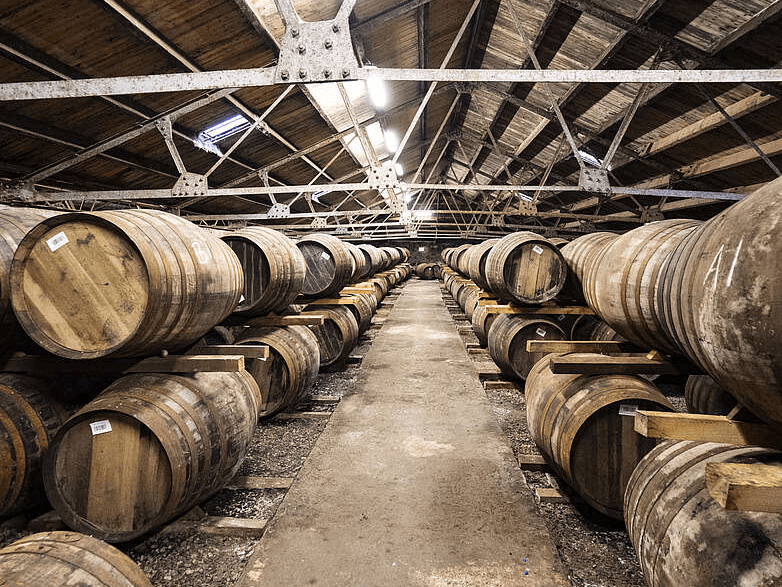
One of the most common questions among whisky cask buyers is simple: how long should I hold my cask?
The answer depends on the whisky's current age, the acquisition price, annual costs and potential future demand.
While maturation creates the opportunity for whisky to develop, additional years do not automatically guarantee a higher resale price.
Why Does Age Matter?
Scotch whisky must mature for at least three years before it can legally be described as Scotch whisky.
Over time, interactions between spirit, oak and warehouse conditions can create greater complexity.
Older whisky can also become commercially attractive because mature stock requires many years to produce.
However, the relationship between age and value is not linear.
Understanding Different Holding Periods
Three to five years
A shorter holding period may appeal to buyers purchasing casks that already have substantial maturity.
For example, someone purchasing a 12-year-old cask could explore selling it at 15 or 17 years old.
Five to ten years
This provides additional maturation time and may allow buyers to target a specific age category.
A ten-year-old cask purchased today could potentially be marketed as a 15-, 18- or 20-year-old cask in the future, depending on the holding period.
Ten years or longer
Longer ownership can be attractive when the acquisition cost is competitive and the whisky remains suitable for extended maturation.
However, storage, insurance, evaporation and opportunity costs accumulate.
Calculating the Real Holding Cost
Consider a hypothetical cask purchased for £5,000.
Assume annual storage and insurance cost £100.
Over ten years:
- Initial investment: £5,000
- Storage and insurance: £1,000
- Total direct cost: £6,000
If the cask sells for £8,000, the gross profit before selling fees and taxes is £2,000.
That is a 33.3% increase on the £6,000 total direct cost.
Additional transaction costs could reduce the actual return.
When Should You Sell?
A sensible exit strategy should consider more than age alone.
Buyers should assess current wholesale demand, independent bottler requirements, available RLA and comparable transactions.
Sometimes selling a cask earlier at an attractive price makes more commercial sense than holding it for another five years.
The Bottom Line
The ideal holding period is determined by the relationship between purchase price, maturation potential, holding costs and the eventual resale market.
At Cask Empire, we encourage owners to assess their casks periodically rather than treating maturation as a guarantee of appreciation.