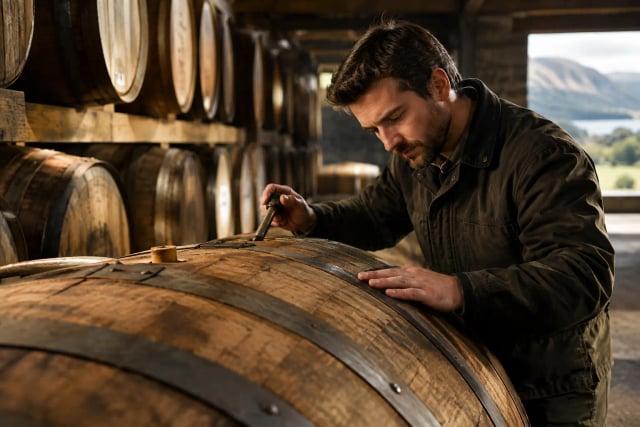
Purchasing a whisky cask involves acquiring a physical asset stored within a regulated warehouse environment.
Unlike purchasing a bottle of whisky, buyers will not usually take physical delivery of their cask.
Instead, ownership relies on appropriate contracts, documentation and warehouse records.
This makes understanding ownership certificates particularly important.
What Is a Whisky Cask Ownership Certificate?
A whisky cask ownership certificate is a document commonly issued by a seller or broker to record details of a purchase.
It may identify:
- The purchaser
- Distillery
- Cask number
- Filling date
- Cask type
- Warehouse location
- Relevant alcohol-volume information
Certificates can provide useful supporting evidence.
However, there is no single universally prescribed ownership-certificate format that independently guarantees legal title to every Scotch whisky cask.
Does a Certificate Guarantee Ownership?
No.
A certificate issued by a broker does not, by itself, establish that the warehousekeeper recognises the named purchaser as the owner.
The underlying sale agreement and the warehouse's ownership records are particularly important.
The Scotch Whisky Association recommends that buyers ensure their ownership is properly recorded and acknowledged by the warehousekeeper.
What Does Proper Ownership Documentation Look Like?
A robust purchase should include:
1. A detailed sale agreement
This should identify the seller, buyer and specific cask being transferred.
2. Evidence of payment
A receipt or invoice should document the purchase.
3. Precise cask identification
The documentation should include the cask number, distillery, filling information and storage location.
4. Warehouse acknowledgement
Buyers should obtain evidence that the warehousekeeper has recorded or acknowledged the ownership transfer.
5. Storage and insurance arrangements
The buyer should understand who is responsible for ongoing costs and how the cask is insured.
Why Does Warehouse Verification Matter?
Consider a buyer paying £10,000 for a whisky cask.
The broker issues a professional-looking certificate, but the buyer cannot establish where the cask is stored.
Without independent confirmation, verifying the existence and status of the asset becomes considerably more difficult.
Conversely, an identifiable cask supported by appropriate commercial documentation and warehouse acknowledgement provides a stronger foundation for ownership verification.
What Should Buyers Do Before Purchasing?
Buyers should undertake appropriate due diligence before making payment.
This includes confirming the seller's identity, reviewing the contract and establishing how the relevant warehouse records ownership transfers.
Where appropriate, professional legal advice should be obtained.
The Bottom Line
A whisky cask ownership certificate is supporting documentation, not a substitute for properly established legal title and warehouse acknowledgement.
At Cask Empire, we believe transparent documentation and warehouse verification should be fundamental expectations for every private whisky cask buyer.