The Day Dublin’s Streets Ran With Whiskey
On 18 June 1875, one of the strangest and most tragic disasters in Irish whiskey history unfolded in Dublin's Liberties.
Today, we think of a whisky cask as something valuable.
It is carefully filled, stored in a bonded warehouse and left to mature for years. Owners track its volume, ABV and condition while waiting for the right opportunity to sell or bottle it.
But in Dublin in 1875, thousands of casks became the centre of a very different story.
One that would leave whiskey running through the streets — and ultimately claim 13 lives.
The Dublin Whiskey Fire
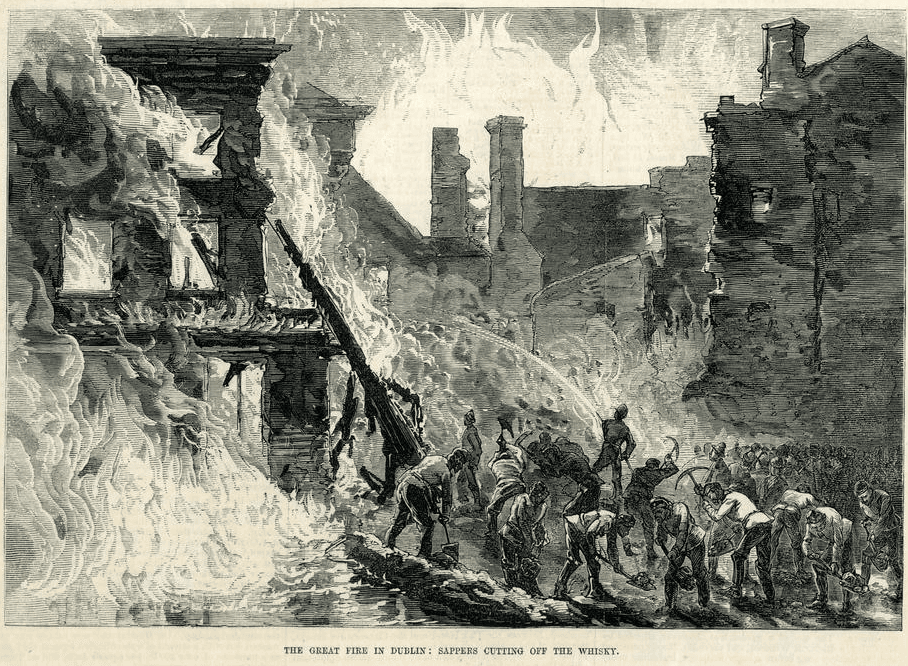
On 18 June 1875, a fire broke out at a whiskey storehouse in Dublin's Liberties.
Inside were around 5,000 hogsheads of whiskey.
As the fire spread and temperatures rose, the wooden casks began to fail. Barrels burst open, releasing their contents into the surrounding streets.
What followed was almost unimaginable.
Rather than simply burning in the storehouse, the whiskey escaped and began flowing through the streets of Dublin.
Reports described a river of whiskey approximately 15 centimetres deep running through the Liberties.
Homes were damaged.
Livestock were killed.
And the total property damage was estimated at more than £100,000 — an enormous sum for the time.
But the fire itself wasn't the most extraordinary part of the story.
Dublin Discovered a Very Dangerous River
As the whiskey flowed through the streets, local residents began collecting it.
People grabbed whatever containers they could find — pots, bowls, bottles and other vessels — and started scooping up the whiskey as it passed.
It might sound almost comical today.
It wasn't.
The whiskey flowing from the casks was effectively cask strength.
Unlike the whiskey most people would have encountered when drinking normally, this spirit had not been diluted to a lower bottling strength.
People were consuming it directly from the streets.
The consequences were devastating.
13 People Died
The whiskey caused widespread intoxication, with 24 people requiring hospital treatment.
Thirteen people ultimately died from alcohol poisoning.
What began as an extraordinary spectacle had become a tragedy.
The disaster demonstrated something that is easy to forget when looking at whisky as a collectible asset:
A whisky cask isn't simply a barrel of alcohol.
It contains a powerful spirit that can behave very differently depending on how it is stored, handled and consumed.
Why Were There So Many Casks?
To understand the scale of the disaster, it helps to understand Dublin's relationship with whiskey during the nineteenth century.
The Liberties was at the heart of Dublin's distilling industry.
Large distilleries and whiskey warehouses operated throughout the area, and enormous quantities of spirit were stored in wooden casks.
A hogshead itself could contain around 225 litres, depending on the type and specification of the cask.
With approximately 5,000 hogsheads involved, the potential volume of whiskey was enormous.
Even allowing for differences in cask size and fill levels, we're talking about well over 1 million litres of spirit.
That puts the scale of the disaster into perspective.
The Strange Economics of a Whiskey Fire
There is also an interesting lesson here for modern cask owners.
A cask's value isn't simply determined by the liquid inside it.
The cask, the warehouse, the documentation, ownership and the conditions under which the spirit is stored all matter.
In 1875, those 5,000 casks represented an enormous concentration of valuable spirit.
Once the fire began, however, that value became extremely difficult to control.
The whiskey was no longer safely contained.
And once the casks failed, the contents became both an environmental hazard and a serious danger to anyone who came into contact with them.
From Whiskey Disaster to Modern Cask Storage
Thankfully, the circumstances surrounding the Dublin whiskey fire are very different from the way Scotch whisky casks are managed today.
Modern whisky casks are generally held in controlled, bonded warehouse environments, where inventory, ownership and storage are documented.
For today's cask owner, good storage is about much more than simply keeping a barrel somewhere safe.
It means knowing:
- Where the cask is stored
- Who legally owns it
- How much spirit it contains
- Its current ABV
- Its physical condition
- What documentation exists
- What costs are being incurred
- How ownership can eventually be transferred
The whisky may sit quietly for years, but the ownership of that asset still needs to be actively managed.
A Cask Is Designed to Hold the Spirit — Not the Other Way Around
The Dublin disaster is a remarkable piece of whiskey history, but there is something almost poetic about it.
Thousands of casks were designed to contain and mature whiskey over time.
When those casks failed, the very thing that made the whiskey valuable became the source of the disaster.
Today, the opposite is true.
We want the spirit to remain safely contained in its cask, gradually changing over time as it matures.
For a cask owner, that means the boring details matter.
Good records.
Good storage.
Good documentation.
Good monitoring.
Because sometimes the most valuable thing in the warehouse is the thing you least want escaping.
And thankfully, today we prefer our whiskey exactly where it belongs:
Safely inside the cask.
And yes — for this story, we're sticking with "whiskey".