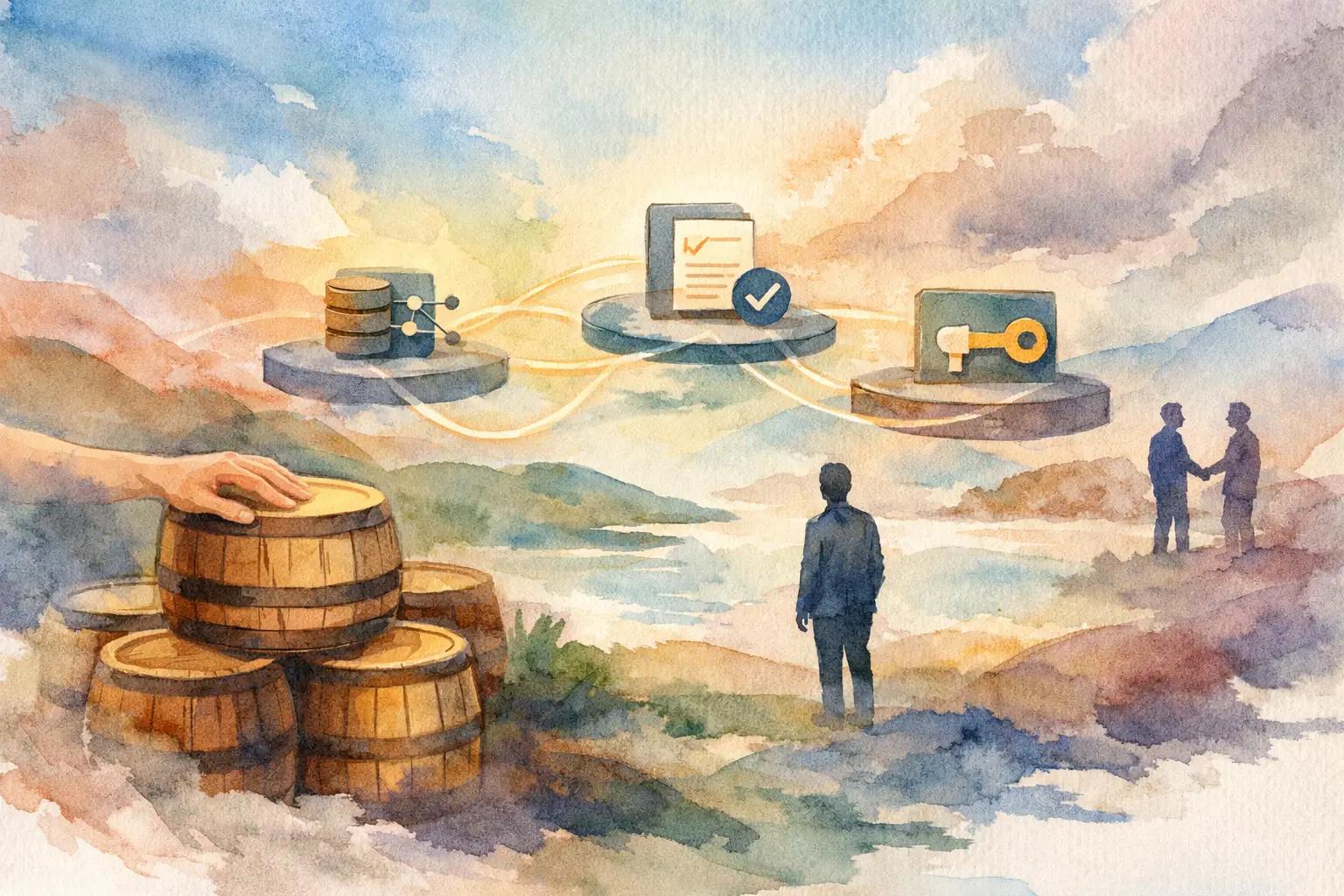
A whisky cask may be a physical asset, but buying or selling one is rarely a simple physical transaction. The cask can remain in a bonded warehouse for years, while its value, insurance position, regauge history, ownership records and eventual buyer all need careful attention. That is where cask platforms can provide real practical value: they bring structure to a market that has traditionally depended on personal contacts and fragmented information.
For a buyer, the question is not simply whether a cask is available. It is whether the stated details are credible, the ownership route is documented, the stock remains under bond, and there is a realistic plan for managing or eventually selling it. For an existing owner, the central concern is usually liquidity: finding an appropriate buyer without creating uncertainty around price, paperwork or transfer.
What cask platforms are designed to do
A cask platform is a specialist marketplace and transaction support service for whisky casks. The strongest platforms do more than display listings. They help participants assess cask information, coordinate buyer-seller communication, manage secure payment steps and organise ownership transfer with the bonded warehouse.
This matters because cask ownership has several moving parts. A listing may identify the distillery, cask type, fill date, age, alcohol strength, litres of alcohol and warehouse location. Yet those details alone do not establish that a seller has the right to transfer the cask, or that the buyer will receive clear warehouse-recognised ownership documentation after completion.
A well-run platform creates a defined process around these points. It should clarify what is being sold, what documentation supports the sale, how money is handled, which fees apply, and what actions are required before the buyer's name is recorded by the warehouse or relevant managing party.
Why a marketplace approach can improve the cask experience
The whisky cask market has appeal for collectors and alternative asset buyers because it combines scarcity, provenance and the potential for maturation over time. It also carries risks that are easy to underestimate. Prices are not universally published, casks vary materially even within the same distillery and storage costs continue regardless of whether an owner is ready to sell.
A marketplace approach can reduce some of this friction by making inventory and process more visible. It does not remove commercial risk or guarantee a future price, but it can help buyers and sellers make decisions using clearer information.
Better visibility at the point of purchase
A useful listing should go beyond persuasive descriptions. Buyers should expect key commercial and operational details: the cask's distillery and vintage, cask specification where available, current age, warehouse status, any known annual charges, and the basis on which ownership will transfer.
The depth of information will vary. Some older casks have extensive records; others may have a more limited data trail. That is not automatically a reason to walk away, but it is a reason to ask direct questions before committing funds. If a fact cannot be verified, it should be presented as uncertain rather than treated as established.
A clearer route from payment to ownership
Payment is only one stage of a cask transaction. The critical outcome is properly recorded ownership. Depending on the structure of the sale and the warehouse arrangement, that can involve a delivery order, warehouse confirmation, a transfer certificate, updated account records or another accepted form of title documentation.
A professional platform explains this sequence in advance. It should identify who holds the cask, who will issue or recognise the transfer documentation, whether the buyer needs a warehouse account, and when the transaction is considered complete. This avoids the common mistake of assuming that an invoice alone proves ownership.
More disciplined resale planning
Casks are not traded on a central exchange with a single daily market price. A resale outcome depends on the distillery, age, cask type, remaining volume, quality, condition, brand demand, documentation and the number of credible buyers active at the time.
Cask platforms can support a more disciplined exit process by helping owners prepare a sale-ready file and position the cask against relevant market evidence. A sensible pricing discussion distinguishes between an ambitious asking price, a supportable market range and the net amount an owner may receive after commission, transfer charges, warehouse costs and any other applicable fees.
What buyers should check before using cask platforms
The convenience of an online marketplace should never encourage a buyer to treat a cask as an ordinary retail product. It is a high-value asset held within a regulated storage environment, and due diligence remains essential.
Start with the cask itself. Confirm the distillery, fill date, cask number where available, type of wood, present age, current alcohol strength and volume. Ask whether the figures are drawn from a recent regauge or estimate, particularly for older stock. Natural evaporation, commonly called the angel's share, reduces volume over time and may affect the eventual bottling yield.
Then examine the seller's ability to transfer the asset. The platform should be able to explain the ownership evidence it has reviewed and how the warehouse transfer will be coordinated. If a proposed transaction relies on vague assurances, incomplete papers or pressure to pay before the process is understood, pause and seek clarification.
Finally, establish the full cost of ownership. Purchase price is only the starting point. Bonded storage, insurance arrangements, regauges, administration, transfer charges, sampling and eventual bottling can all affect the economics. Tax treatment is personal and jurisdiction-specific, so buyers should obtain independent tax advice where needed rather than relying on general statements about duty or investment returns.
What sellers need from a credible resale channel
For owners, a platform is most valuable when it combines market reach with operational control. A buyer may be interested in the cask, but the sale can still stall if the warehouse paperwork is unclear or the asset details cannot be supported.
Before listing, sellers should gather their purchase documents, delivery order or equivalent ownership record, warehouse details, cask specifications, latest regauge information and a clear record of ongoing charges. A platform can then assess whether the file is complete enough to market confidently and whether any issue needs resolving before a buyer is introduced.
Price guidance deserves particular care. Casks with the same stated age can command very different values. A sought-after distillery, unusual maturation history or compelling provenance may support a premium, while reduced alcohol strength, limited remaining volume or restricted transferability can narrow the buyer pool. A strong platform should not present a valuation as a promise. It should explain the assumptions behind the proposed range and remain candid about demand.
Where platforms have limits
Cask platforms improve access and process, but they cannot make every cask liquid. A buyer may take time to emerge, especially for niche distilleries, unusually priced stock or casks with incomplete records. Market conditions can change, and demand for particular distilleries or styles can rise and fall.
Nor can a platform substitute for independent judgement. Buyers should consider their holding period, total costs, appetite for illiquidity and reasons for owning the cask. A collector looking to bottle for private enjoyment may reasonably make a different decision from an owner seeking a financially efficient resale.
The most credible operators are clear about these limits. They focus on verified information, transparent fees and a documented transfer process rather than implying that whisky casks are a guaranteed route to profit.
Choosing between cask platforms
When comparing providers, look closely at the operating model rather than the polish of the website. Does the platform explain how listings are verified? Are fees and responsibilities stated before an offer is made? Is there a defined payment and transfer sequence? Can it coordinate with bonded warehouses and provide practical support after completion?
It is also worth asking how the platform approaches resale. Some services are strongest at sourcing casks; others are better equipped to help existing owners prepare, price and market stock for sale. Cask Empire, for example, is structured around both transaction facilitation and portfolio support, reflecting the fact that ownership administration and exit planning are closely connected.
A good platform gives you a clearer record, a clearer process and a clearer understanding of the costs and constraints attached to the cask. That clarity is worth seeking before money changes hands - and it remains valuable long after the purchase is complete.

